

Mountain Setting
The city lies in Boulder Valley, where the mountains meet the Great Plains, at an elevation of 5,430 feet above sea level.
The Flatirons rise west of the city as tilted slabs of sedimentary stone on the foothills. Boulder Creek flows through the center of town, with water derived mainly from snowmelt and smaller springs west of the city.
City Character
Boulder is a college town and hosts the University of Colorado Boulder, the flagship and largest campus of the University of Colorado system. Numerous research institutes are also based in the city.
At the 2020 census, Boulder had a population of 108,250. It is the county seat and most populous municipality in Boulder County, and it is part of the Front Range Urban Corridor.
Early History
Archaeological evidence shows that Boulder Valley has been inhabited by Native American tribes for more than 13,000 years. Indigenous peoples moved seasonally between mountains and plains, and by the 1500s the Ute people held primary occupation of the valley. The Arapaho later migrated to the region.
Boulder was founded in late 1858, when prospectors led by Thomas Aikins reached Boulder Canyon during the Colorado Gold Rush. Gold was found along Boulder Creek in early 1859, bringing miners and merchants, and the Boulder City Town Company was formed that year to establish a settlement at the canyon mouth.
Planning and Open Space
Boulder voters approved the Blue Line city-charter amendment in 1959, limiting city water service above a specified elevation to protect the mountain backdrop from development. In 1967, voters approved a dedicated sales tax for open-space acquisition.
The city later adopted a comprehensive plan, a building-height limit to preserve views of the Flatirons and surrounding mountains, a Historic Preservation Code, and a residential-growth management ordinance. Boulder is surrounded by recreational open space, conservation easements, and nature preserves.
Culture and Recreation
Boulder has hosted the Bolder Boulder road run on Memorial Day since 1979, with the race finishing at Folsom Field.
The Boulder International Film Festival is held annually in March at venues around the city, including the Boulder Theater. Starting in 2027, Boulder is scheduled to become the new home of the Sundance Film Festival.
What it is like
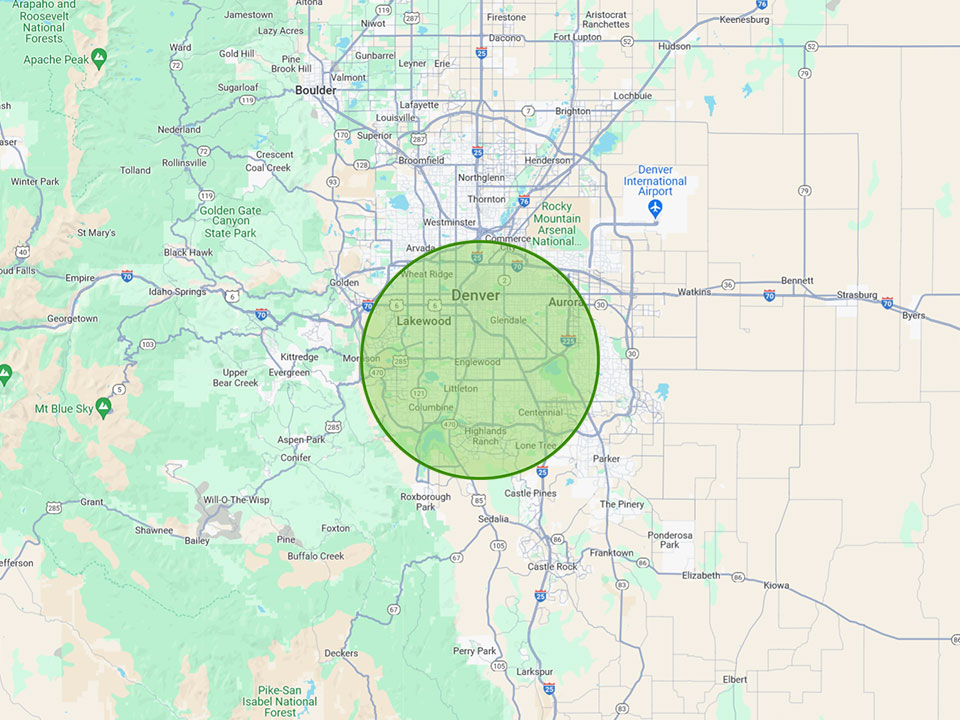
Boulder is the largest city in Boulder County, in the 7-county Metro Denver region, within a 35-minute drive of downtown Denver and 45 minutes from Denver International Airport. Boulder is known as an innovation and startup hub, with the University of Colorado, more than a dozen national research labs and over 7,000 businesses.
Homes and housing
Boulder Valley has about 58,000 homes, including single-unit detached homes, duplexes, townhomes, apartments, condominiums, manufactured homes and accessory dwelling units; about half are apartments or condominiums and around 40% are single-unit detached homes. Since 2015, most new housing has been apartments and condominiums, averaging about 370 homes per year, concentrated near downtown, Boulder Junction, CU Boulder and parts of east, north and south Boulder. The Neighborhoods Class includes Neighborhood 1 and Neighborhood 2, and Boulder began Historic Context Reports in 1989.
History and landmarks
Boulder land has been inhabited by Indigenous people for more than 13,000 years; prospectors settled near Boulder Creek in 1858, formed the Boulder City Town Company on Feb. 10, 1859, and the town incorporated in 1871 with just over 340 residents. Old Main opened at the University of Colorado in 1877, the Texas-Colorado Chautauqua opened July 4, 1898, and Hotel Boulderado opened Jan. 1, 1909. Since 1974, Boulder has designated 10 historic districts and more than 225 individual landmarks.
Sources: Boulder, Colorado (Wikipedia, CC BY-SA); bouldercolorado.gov; bouldercolorado.gov; bouldercoloradousa.com