

Industry & Growth
Rail freight, copper and cattle built the first economy. Davis-Monthan, missile work and the University of Arizona built the one that followed.
Rails, cattle and ore
An Arizona Highways feature marking 75 years of the Southern Pacific in Tucson said the railroad brought in mining machinery and carried the product out, and hauled in feed and hauled out cattle. It called the railroad the most important single business factor in the development of Tucson and Pima County. The article was about the railroad, so weigh that accordingly.
The same piece named Arizona's "four C's of copper, cattle, cotton and climate." Cattle left marks on the land. The university's campus began on overgrazed ranchland, and overgrazing is among the human factors listed in the decline of the Santa Cruz River.
Copper southwest of town
The copper country sits southwest of town. Along the east flank of the Sierrita Mountains, 20 miles out, scattered underground mines produced lead-silver and copper from the 1870s. The big change came in the 1950s, when ore bodies buried under the Santa Cruz Valley were found with geophysical surveys, the first major Arizona ore bodies found that way.
Commercial production at the Mission deposit began in 1961, and the following year Pima County was Arizona's top copper producer. With no smelter nearby, the concentrate went by rail to Hayden.
Runways and missiles
Davis-Monthan started in 1925 as a landing field and is named for two Tucson-born World War I pilots, Samuel Davis and Oscar Monthan. It became Tucson Army Air Field in 1940, and bomber crews trained there on B-24s and B-29s.
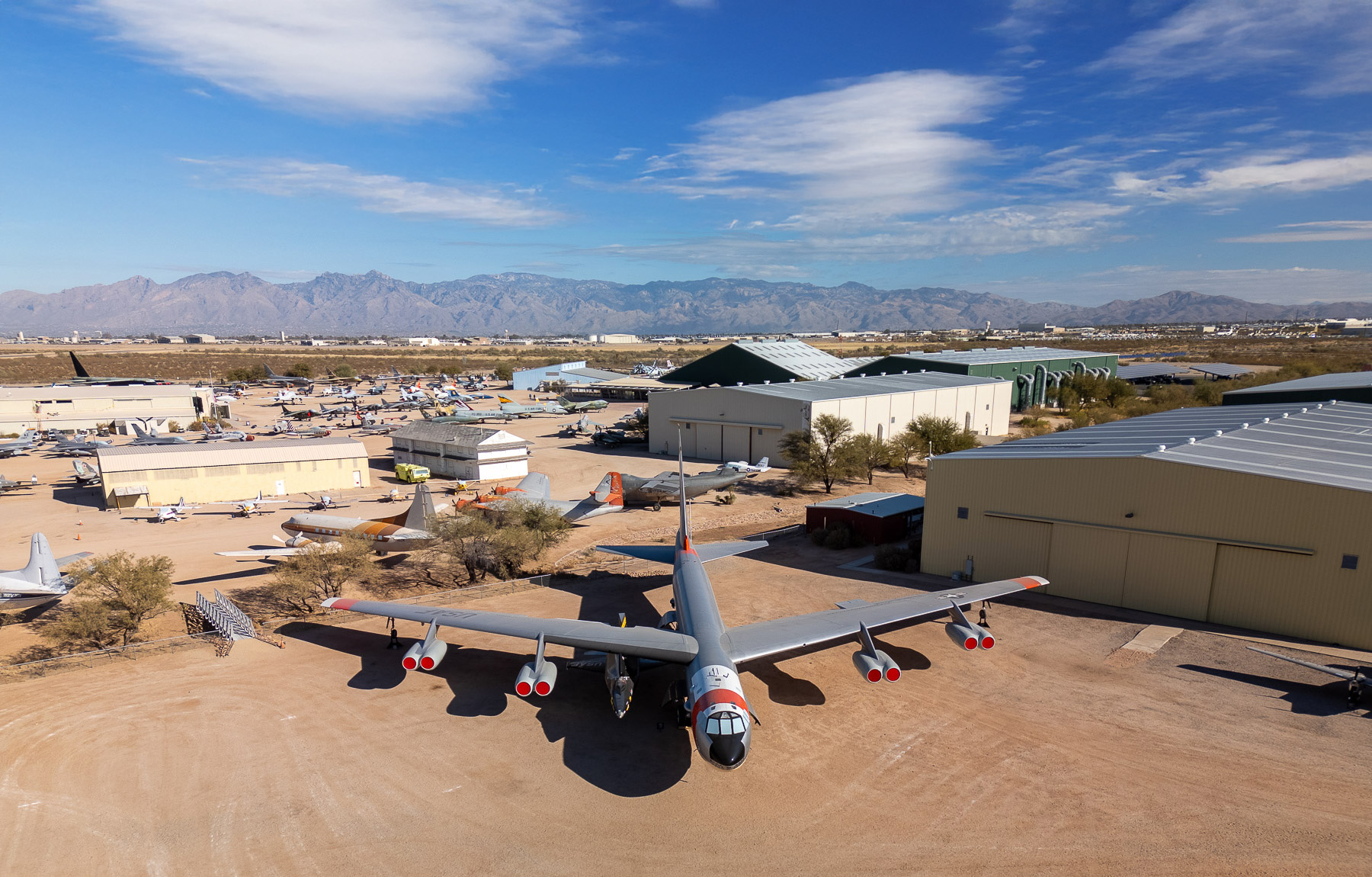
After the war, the base was picked as a storage site for decommissioned aircraft. Tucson's low humidity and alkaline soil made it ideal, and more than 4,000 military aircraft are parked there now. In 1951 Hughes Aircraft built a missile plant in Tucson, and the Air Force bought it before the year was out. In 1962 the 390th Strategic Missile Wing and its 18 Titan II sites around Tucson were activated.
The university as an economic engine
Much of Tucson's economic development has centered on the University of Arizona. A study for the Arizona Board of Regents put the university's economic impact for fiscal year 2017 above $4.1 billion, with research spending of $622.2 million, 21st among public universities.
It also seeded a local industry. Roughly 150 Tucson companies design and make optics and optoelectronics systems, which earned the city the nickname Optics Valley. Much of that comes from the Steward Observatory, one of few places that can cast the giant mirrors used in telescopes.
Air conditioning and the boom
Tucson had 7,531 people in 1900 and 36,818 in 1940. The Downtown Tucson Partnership says the biggest growth spurt came from World War II and the invention of air conditioning, and that in about a decade the population grew five-fold.
Health seekers came earlier. After World War I, tuberculosis patients and veterans who needed respiratory therapy came for the clean, dry air, and a Veterans Administration hospital opened at Pastime Park in 1928.