


Tucson Today
Tucson's economy runs on government, health care, the university and defense and optics firms, with a fare-free bus and streetcar system, two interstates and slow, steady growth.
What the job market looks like
In September 2026 the Bureau of Labor Statistics counted 406,300 nonfarm jobs in the Tucson metro. Government led with 79,900, or 19.7 percent, followed by education and health services at 75,900 and trade, transportation and utilities at 68,400. Manufacturing accounted for 28,400.
The metro unemployment rate that month was 4.8 percent, with 461,897 people employed in a labor force of 485,033. A year earlier, in September 2025, the employed count was 483,408, so the count of working residents is down by about 21,500 over the year.
Anchors: the university, the base and optics
Much of Tucson's economic development has centered on the University of Arizona, the city's largest employer. Davis-Monthan Air Force Base on the southeastern edge also provides many jobs. The base is best known for the 309th Aerospace Maintenance and Regeneration Group, the aircraft graveyard for excess military and government aircraft.
Roughly 150 Tucson companies design and make optics and optoelectronics, which earned the city the nickname Optics Valley. Business Week used it in a 1992 cover story. Raytheon Missiles and Defense, formerly Hughes Aircraft, is among the employers with a large presence in town.
Schools and hospitals
Tucson Unified is the largest school district around the city, with 40,316 students in 2024-25 according to the federal Common Core of Data. Sunnyside has 13,979 and Amphitheater 11,277. The University of Arizona has 54,384 students, and Pima Community College, which says it is shifting toward the region's aerospace, defense and healthcare employers, enrolled 16,283 in fall 2024.
Tucson Medical Center is a locally governed nonprofit hospital, licensed for 568 beds, and it grew out of a tuberculosis sanatorium; it opened as a general hospital on November 9, 1944. The University of Arizona is affiliated with Banner - University Medical Center Tucson, and the streetcar line runs to the Arizona Health Sciences Center and University Medical Center.
Getting around
Tucson International is the second busiest airport in Arizona, after Phoenix Sky Harbor, and FAA records show 1,959,789 enplanements in 2024. The Tucson Airport Authority runs it under a long-term lease, and Sun Tran routes 11 and 25 reach it. Interstate 10 passes west of downtown, while Interstate 19 leaves it south of downtown and runs to Nogales, at the Mexican border. I-19 is the only Interstate in the country that uses kilometer posts instead of mileposts.
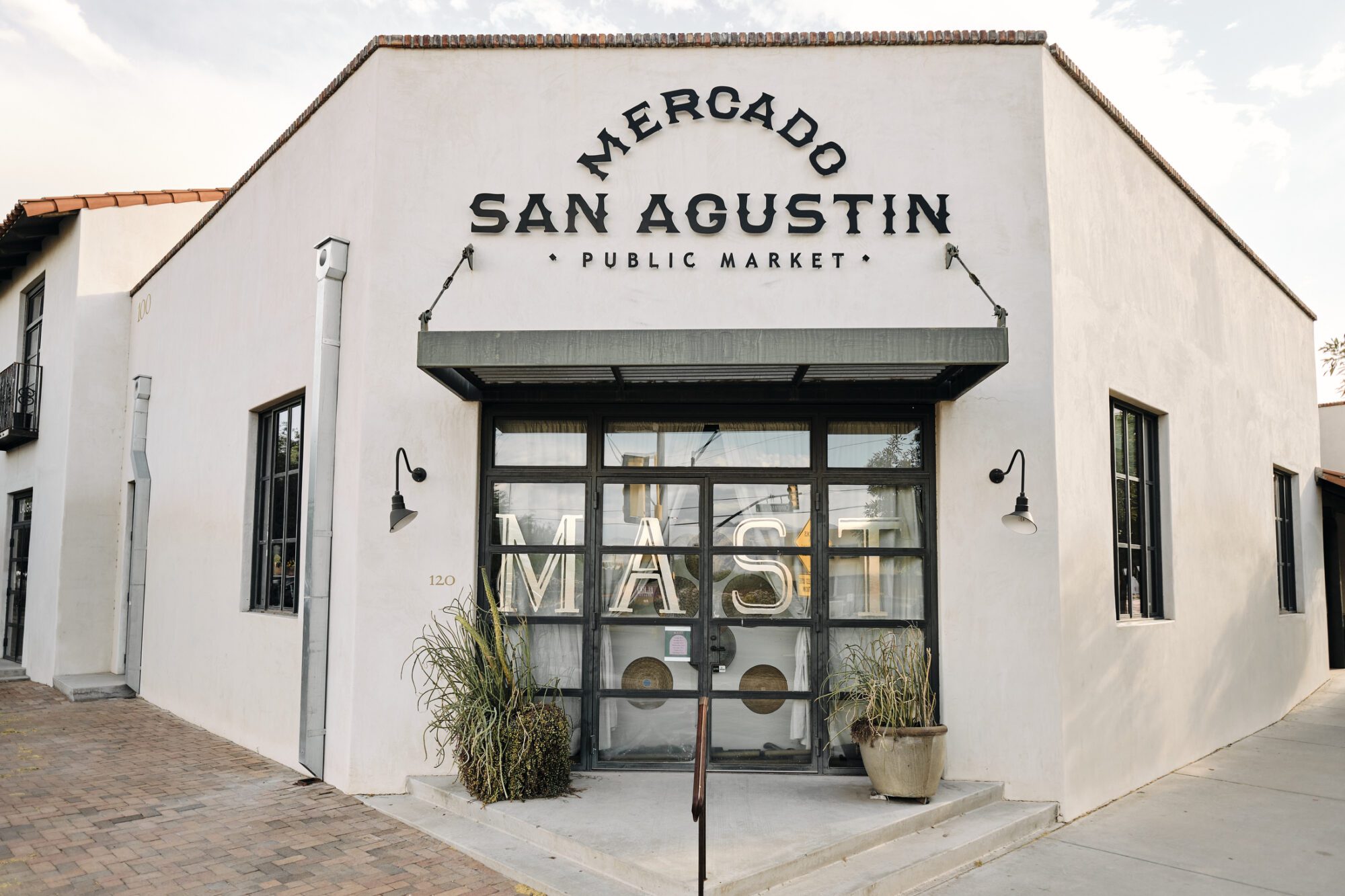
Buses and the streetcar cost nothing to ride. Sun Tran's own site says Sun Tran, Sun Link, Sun Van, Sun On Demand, Sun Express and Sun Shuttle rides remain fare free at the direction of the Mayor and Council. The 3.9-mile Sun Link line has 23 stops and links Mercado San Agustín, Downtown, Fourth Avenue, Main Gate Square and the university. Sun Tran logged 18,315,300 rides in 2025.
Growth and what is changing
Growth is modest. The Census Bureau's 2025 estimate for the city is 1.1 percent above the 2020 census, and its five-year estimates for the wider area show a 2.1 percent rise between the 2020 and 2024 editions, to 1,060,490 people. On housing, the city's median home value is $266,200 and median gross rent is $1,145 a month in the 2020-2024 estimates.
Downtown redevelopment was the big project of the late 2010s. Rio Nuevo, stalled in planning for more than a decade, eventually produced Mission Garden, a living museum at the foot of Sentinel Peak that now says it is on the National Register of Historic Places.
- Tucson, Arizona
- Davis-Monthan Air Force Base
- Tucson Medical Center
- University of Arizona
- Tucson International Airport
- Sun Tran
- Sun Link
- Local Area Unemployment Statistics and Current Employment Statistics, Tucson metro, September 2026
- Common Core of Data (districts) and IPEDS (colleges)
- QuickFacts and 2024 ACS 5-Year Estimates
- About the University
- About Pima
- Fares & Passes
- Sun Link Streetcar
- Friends of Tucson's Birthplace