Los Carneros: How Bay Fog and Cool-Climate Terroir Define Napa's First Climate-Based AVA Page 1 of 2
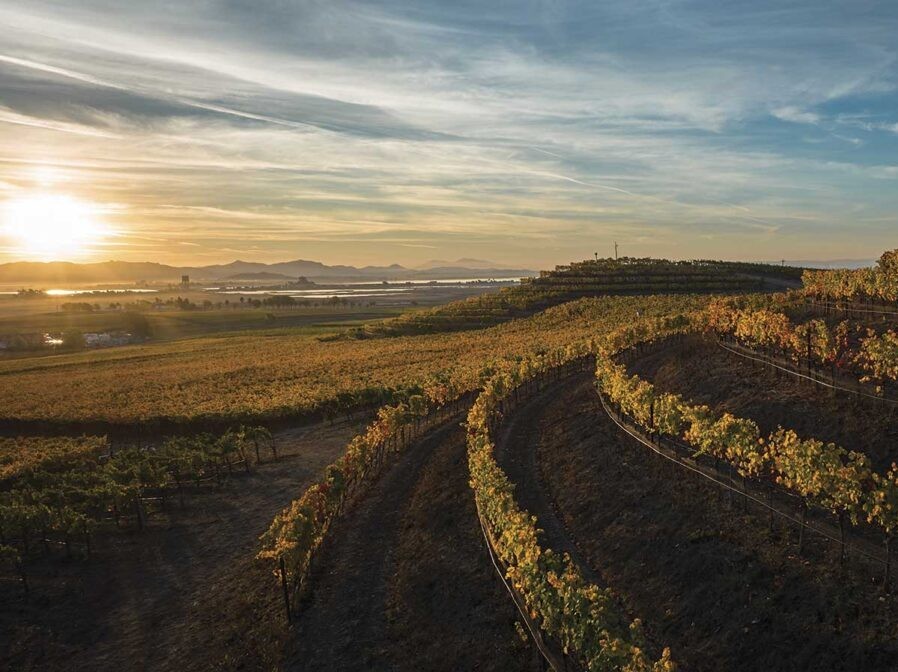
The Los Carneros AVA lies at the southernmost tip of Napa Valley, where low-rolling hills meet the San Pablo Bay. Known simply as “Carneros,” this is a land defined not by grandeur or height, but by the soft marine breeze, the slow lift of morning fog, and the unmistakable cool-climate terroir expressed in every glass poured. Officially recognized in 1983 as the first AVA defined by climate rather than geography, Los Carneros remains a place where the Bay creates wines of freshness, vibrancy, and precision .
Photo courtesy of Etude
Los Carneros stretches across both Napa and Sonoma counties, a rare bi-county designation that speaks to its definition by climate. Rolling from sea level up to 700 feet, the AVA is anchored by clay-dominated soils, which hold winter rains and delay bud break, then restrict vigor through shallow, dry topsoil in summer. “The cool maritime climate allows for wines with freshness and vibrancy, while the soil lends depth and character,” says Jon Priest, senior winemaker and general manager at Etude. This dance of climate and clay defines Carneros as a place where winemakers excel in crafting elegant wines with balanced acidity.
Each day begins with fog that lingers into late morning, a natural blanket that slows ripening. By afternoon, strong breezes from the San Pablo Bay sweep over the vines, ensuring daytime highs rarely crest 80 degrees—it’s typically about 20 degrees cooler than up-Valley AVAs. The interplay of fog, sun, and wind is so consistent that, as Priest notes, “You can almost set your watch to when the strong ocean breezes whip over the hilltops to cool the vines.” For Pinot Noir and Chardonnay, this climate preserves acidity, tempers alcohol, and draws out nuance—wines that are structured yet fresh, lean yet layered.
Photo courtesy of Domaine Carneros
Carneros is often called “Napa’s Burgundy,” given its affinity for Chardonnay and Pinot Noir, yet the argument for “Napa’s Champagne” is equally compelling. The Bay’s cooling influence produces fruit that lends itself beautifully to méthode traditionnelle, leading houses like Domaine Carneros to craft world-class sparkling wines. “Those marine influences are what define the region and produce an expression of Pinot Noir and Chardonnay that is lean, balanced, restrained but unctuous,” explains TJ Evans, winemaker at Domaine Carneros. The result is sparkling wines that capture tension—between acidity and power, freshness and depth—hallmarks that have made Carneros a benchmark for domestic sparkling wines.
Carneros is dominated by Chardonnay (50%) and Pinot Noir (43%), the twin pillars that thrive in cool-climate conditions. Pinot Noir here is plush with cherry fruit yet taut with acidity, often showing earth, spice, and a silken structure. Chardonnay ranges from mineral-driven to richly textured, often striking a balance of brightness and cream. Still, Carneros’ story extends beyond the classics.
Etude has championed Pinot Blanc since 2000, exploring the grape’s refreshing potential at its Grace Benoist Ranch. Bouchaine has nurtured Riesling, a passion project that Chris Kajani, president and winemaker, says flourishes in Carneros’ fog-kissed soils: “The cool climate here is perfect for an aromatic grape such as this.” Domaine Carneros experiments with Pinot Clair, a fascinating hybrid wine that Evans began in 2008 as an exploration in texture and crispness. These varietals, alongside Gewürztraminer and Merlot, enrich Carneros’ identity, reminding us that the AVA has much variety to discover.
Photo courtesy of Etude
Etude has been part of the Carneros fabric since 1982, founded just before the AVA itself was established. Rooted in the soils of Grace Benoist Ranch, the estate reflects what Priest calls “a quiet elegance—it’s where restraint and purity meet.” Etude’s ethos has always been about patience and observation—listening to fog, soil, and vine in order to coax out wines of vibrancy and depth. Pinot Noir remains the soul of Etude, crafted with an artistry that allows fruit to fully mature while preserving its natural acidity. Their exploration of Pinot Blanc, planted in 2000, shows their commitment to diversity within the Carneros lens.