


/0x17:700x484/prod01/channel_4/media/hccsedu/content-assets/images/about-us/campus-locations/central-campus/Card_Central-Campus-(1).jpg)
Setting on the Bay
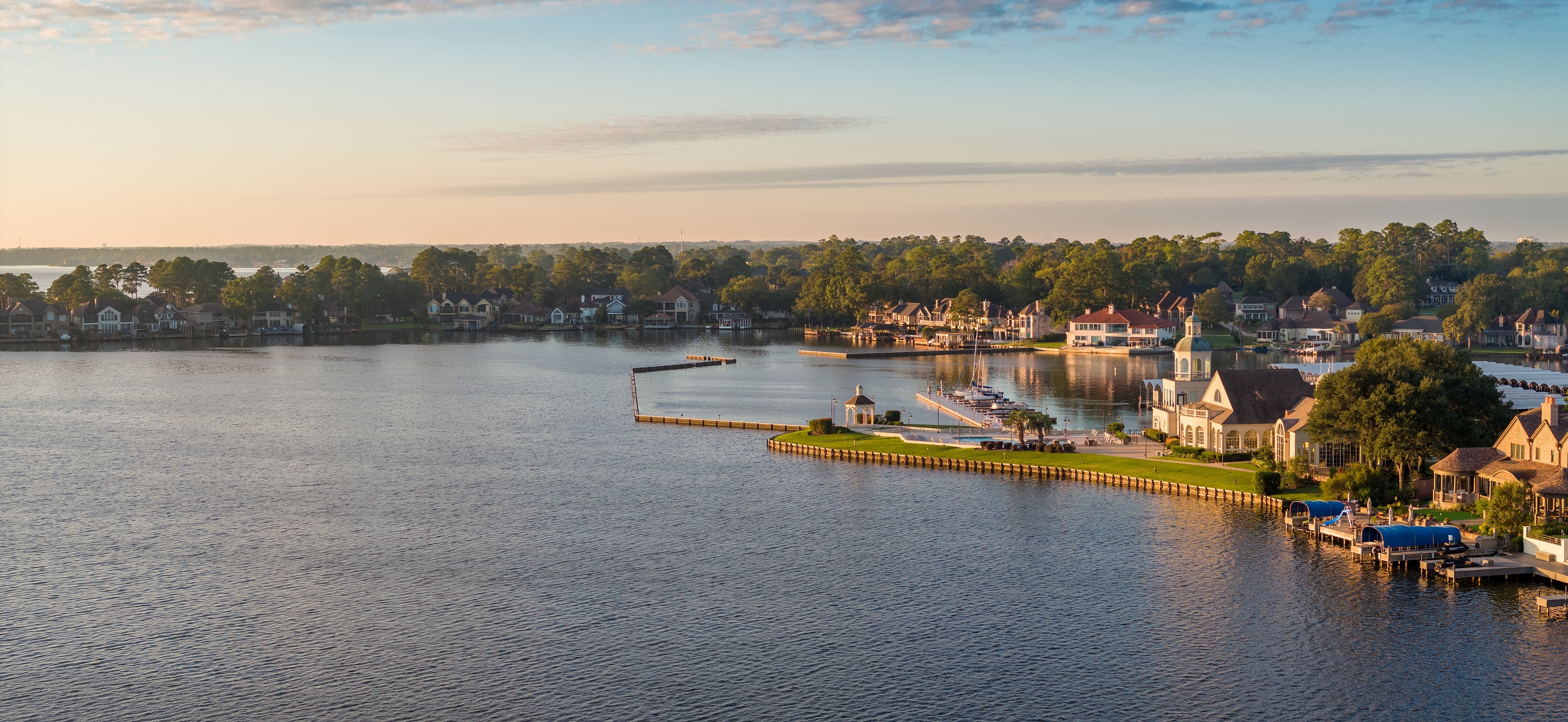
Baytown is part of the Greater Houston metropolitan area and lies within Harris and Chambers counties. It is located on the northern side of the Galveston Bay complex near the outlets of the San Jacinto River and Buffalo Bayou, about 26 miles by road east of Houston.
Water borders much of the city, with Galveston Bay to the south and west and Cedar Bayou to the east. Baytown sits on the Gulf coastal plain, where grassland, marshes, reclaimed swamps, and prairies remain visible in undeveloped parts of the surrounding bay area.
Early Settlement and the Tri-Cities
White American settlers arrived in the area in 1822. Nathaniel Lynch established a ferry crossing where the San Jacinto River and Buffalo Bayou meet, and the Lynchburg Ferry continues to operate. Other early settlers included William Scott and Ashbel Smith.
The present city began as three separate towns: Goose Creek, Pelly, and East Baytown. Goose Creek took its name from the nearby bayou, and the Goose Creek name remains in the local school district. Pelly and East Baytown grew after the discovery of the Goose Creek Oil Field, and East Baytown later became simply Baytown.
Consolidation and Industry
Talk of merging the three communities began after World War I, and the consolidation was approved in 1947. Baytown was officially founded on January 24, 1948, as the combined city.
Oil and petrochemical work have long been part of Baytown’s economy. Humble Oil and Refining Company developed the Goose Creek Oil Field and built an offshore drilling operation in 1916, then later built the Baytown Refinery. Steel manufacturing began near the city in 1970 with United States Steel’s Texas Works; the site later became part of JSW Steel USA, Inc.
Arts and Recreation
Baytown’s Downtown Arts District includes the Baytown Little Theater, Lee College Performing Arts Center, Art Gallery of Baytown, and the Baytown Public Art Program. The theater is volunteer-run, while the performing arts center hosts theater, symphony performances, and art exhibits.
The Baytown Nature Center occupies a peninsula along the Houston Ship Channel and is surrounded on three sides by Burnet Bay, Crystal Bay, and Scott Bay. It serves as both a recreation area and a wildlife sanctuary for bird species, mammals, reptiles, and aquatic species.
Connections
Baytown is served by State Highway 99, State Highway 146, Interstate 10, Spur 330, and the Fred Hartman Bridge from nearby La Porte. Harris County Transit provides local service, Greyhound operates a Baytown station, and METRO express route 236 connects commuters with Downtown Houston during rush hours.
What it is like
Baytown is in the Gulf Coast region, east of Houston and north of Galveston, mostly in Harris County with a small portion in Chambers County, and bordered by eight bays. It is largely centered on industry, including oil, rubber and chemical plants, and is home to petrochemical giants including ExxonMobil and Chevron.
Homes and housing
Baytown’s Comprehensive Plan includes a Housing topic on the number, age and value of housing units and owner/renter percentages, plus a Future City Housing and Neighborhoods focus area for existing and future housing needs. Pioneers began settling near Lynch’s Ferry in 1822; rice farming and brickyards developed the area in the 19th century, and a 1908 oil boom spurred Goose Creek, Pelly and Bay Town, which consolidated in 1948. The 2025-2029 Consolidated Plan addresses housing, infrastructure and community revitalization needs.
Sources: Baytown, Texas (Wikipedia, CC BY-SA); visitbaytown.com; atlas.thc.texas.gov